





How do you make the glass?
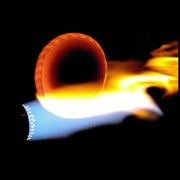
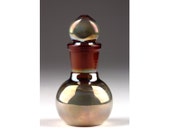
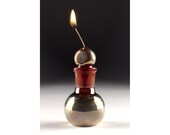
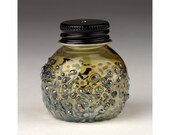
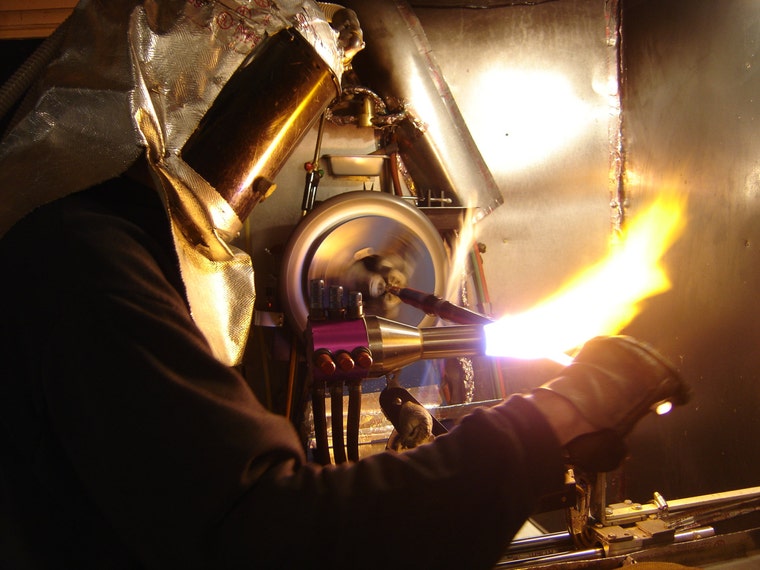
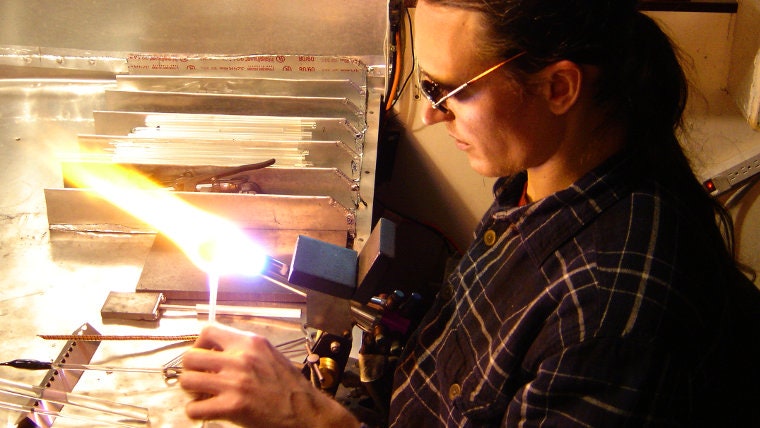
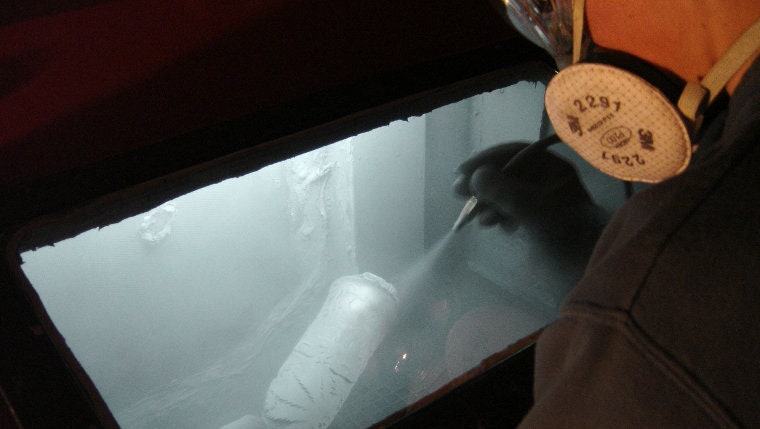
The type of glassworking I do is called lampworking. This has nothing to do with making lamps, it actually refers to the oil lamps that were originally used to melt the glass. Modern lampworkers use compressed gas torches for their heat source. I use a mixture of propane and oxygen to fuel my torches. I use primarily borosilicate glass and some quartz. Borosilicate glass is commonly known by the brand name Pyrex even though the cookware sold by that name is no longer made from borosilicate glass. Borosilicate glass was developed to be heat resistant and is frequently used to make laboratory apparatus. I purchase the borosilicate glass in the form of different sizes of rods and tubes, in a wide variety of colors. By melting, blowing, bending, stretching, and twisting the glass I form the desired shape. A variety of hand tools are used to shape the glass including paddles, picks, pushes, mashers, tweezers, and molds. After the piece is finished I place it in a 1000°F kiln specially made for glass. At the end of the work day I program the kiln to a special cooling cycle that ensures that no stress is left in the glass. This process is called annealing. Once the kiln has reached room temperature I am able to see the final colors which are completely different when hot. Some pieces are then sandblasted or sandcarved to add new visual and textural properties to the glass. The next step is cleaning the glass, quality control inspection, and signing.
