
Love affair with Flutes
Flute intro Videos:
https://youtu.be/qUck5ohFM_Q?si=J_FzmYWgZxCQ-B22
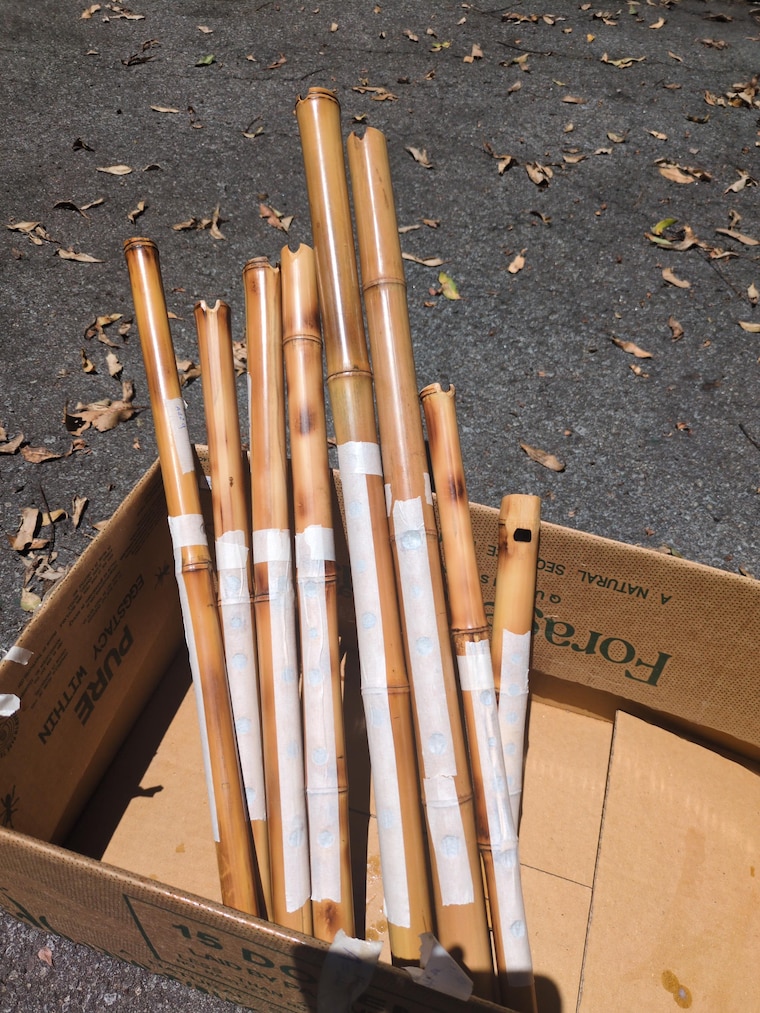
I'll be adding more video links here soon of me playing the flutes. In the meantime, the above link is a You Tube Video of the making of a flute and several examples of the flutes being played.
For now, Etsy removes all sound from product videos, so if you want to hear a flute being played, please message me for a recording.
Hertz Frequency:
There are many who appreciate the different Hertz References for music. The standard Hertz Frequency for music is A=440. That is, the reference point for the tuning of each note in the scale is that A is set a 440. This setting was changed in 1936 by the authorities of the time.
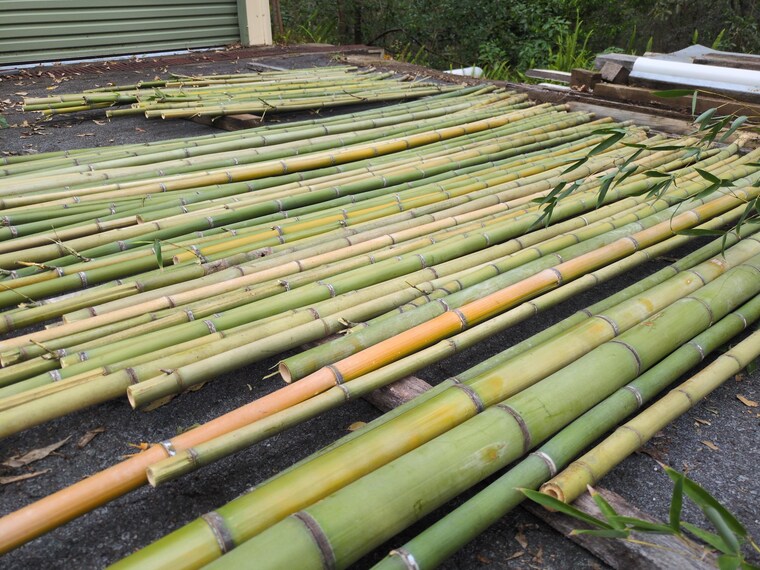
There are those who believe that other Hertz Frequencies such as A=432 - (Golden Mean Spiral) & A=444 - (Heart Resonance), are more in line with the optimal health of the human body and mind, and so I make flutes in all of these Hertz References. Essentially, I make the moutpiece of the flute and open to whatever tuning that particular piece of bamboo is ideally designed for and let the bamboo decide the Key and Hertz. Minor adjustments are made once the mouthpiece is in to move the pitch to the nearest Hertz (432, 440, 444) for even tuning.
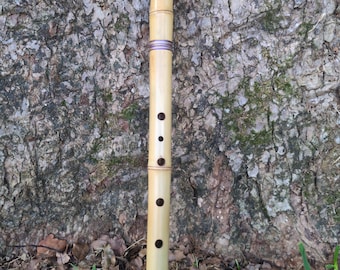
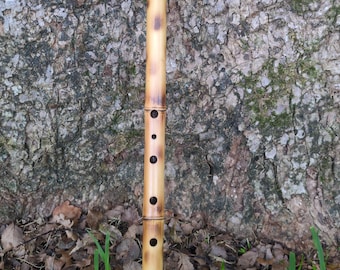
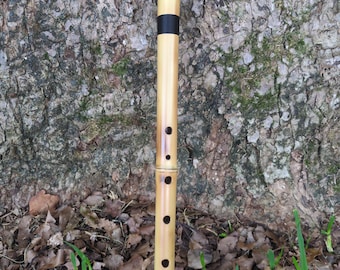
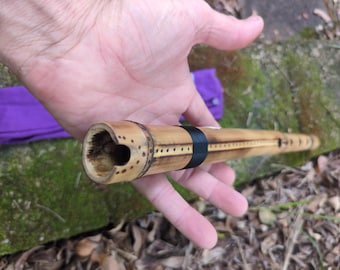
Every Flute has the Hertz Reference and Key Burnt into the back of the flute and will always be mentioned in the details shared with the product.
About Me - Troy:
Since 2009, I have been in love with a number of Wind Instruments, namely
1. Irish Whistle and low whistle
2. Native American Flute
3. Bansuri and other side blown bamboo flutes
4. Shakuhachi Flute
5. South American Quena
On a holiday to Peru in 2015, I purchased my first Quena flute and came home with a bag-full of flutes from that trip, including 10 Quenas, 3 Native American Flutes and a Grandfather Flute 1.3 Metres long.... And that's just the wind instruments...
Slowly over the 5 years after returning from that trip, I began experimenting with getting a better and better tone of my Andean Quenas. I was also running sound-healing events on native flutes and didgeridoo, guitar, vocals, drums and crystal bowls. In 2020, I decided to make a bamboo flute. I very quickly realised that I needed guidance to make a viable flute, and I'm grateful for the support I received from a local flute-maker who shared his craft with me, and a carpenter who made some key tools for me such as the flute cradle and burning rods.
With new tools and important knowledge, I began experimenting with different styles of flute.
As a player of flutes, I have a very clear sense of what a good flute sounds and plays like and I have always endeavored to make the flutes easy to play and get a sweet tone from.
Flute Values:
My personal values that are reflected through the flutes, in no particular order, are......
(1) Beauty - This includes a pleasing physical appearance of the flutes, plus that the flute is pleasing to play and produces a beautiful tone.
(2) Grounding - The art of playing flutes requires Applied Knowledge, Breath, Posture, Presence, Creative Expression, Imagination, Persistence, and Self Belief. These are all qualities that can support us to become the best person we can be. To ground that into our mind, body and emotions. For this reason, I feel the flutes are a potential source of grounding and personal transformation.
(3) Accuracy - As an extension of (1), the flute is musically accurate and in tune. A flute should sound in-tune to the naked ear, although there will always be slight variations in tuning from hole to hole due to the variable nature of bamboo with nodes and the variability of the breath. Tuning can be subjective at times, as the extent to which a player "Leans In to" the flute with the breath can change the pitch of each hole. Also, the flute's pitch raises with the temperature. When a person plays a flute, the warmth of the breath heats the bore, sometimes up to 30 degrees C! As this is above the standard accepted tuning temperature for flutes of 22 Degrees Celsius or equivalent, you see the conundrum..... So, there will always be a small amount of variability with the tuning of a bamboo flute.
(4) Ease of play - Each flute has a breath dynamic that makes the flute play optimally. My aim with each flute is to provide a balance between quality of sound and ease of play. My experience is that when a flute is easier to play, the player finds it easier to access confidence and the joy / bliss state while playing. I'm always looking at ways to improve the playability of the mouthpiece and making it as easy as possible to access and sustain the second octave. Especially the top 2 notes (Top hole and back hole) of the Second octave. In this way, I'm always working on improving the balance between a strong low octave and easy to access second octave. See this video for a detailed conversation about this
https://www.youtube.com/watch?v=HG-_GiLKb10 .
Mouthpiece Design:
As mentioned above, I experiment with different mouthpiece designs.
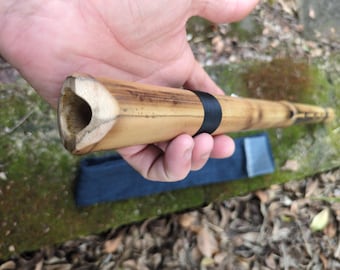
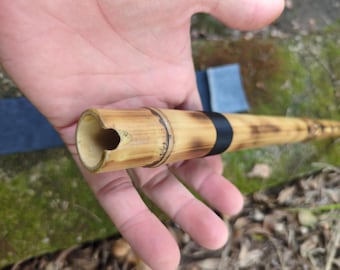
Andean Quena - produces a strong, full, hearty tone for example (Yang or outer), which can be quite loud. I find this mouthpiece can be easier for beginners to learn as the indentation on the Rim of the flute is more pronounced than a shakuhachi.
Japanese Shakuhachi - has a more breathy, quieter, more reflective tone (Yin or inner). Beginners sometimes find this style a bit harder to get s solid tone, as the indentation on the rim of the flute is less pronounced and wider. It can require more precision with lip shape and diaphragm control to get this style to play a clear note. (The trade-off is that the tone of a shakuhachi is sublime!!!)
I find there are different moods I have where I prefer the strong, "Here I am, loud and proud" type tone of the Andean Quena, and then other times when I am inner and wish to express quietly on a Shakuhachi-style mouthpiece.
Both styles are relevant, and I sell both flute styles on this page. Each Flute product listing will explain which tone you can expect from that flute.
My Album:
In 2025, I recorded a Native American Style Flute Album with Guitar and a touch of didgeridoo.
Check it out on Band Camp
Artist - Troy Chapman
Album - First Light
https://troychapman.bandcamp.com/album/first-light
Connect with Me:
If you're still with me in this conversation and want some more information, feel free to connect with me-
Message me through Etsy
Website - https://www.soundvillage.live/
Youtube - https://www.youtube.com/@soundvillage001
My Video "How to play the Quena" (Will also work for Shakuhachi Flute)
https://www.youtube.com/watch?v=GGskR5sJv-Y&t=630s
Happy Creating!
Troy Chapman
Sunshine Coast, Qld, Australia
www.soundvillage.live
- Bamboo Flute Making
- Music Lessons
- Recording
- Events
- Didgeridoo, Native Flutes, Guitar, Vocals
