







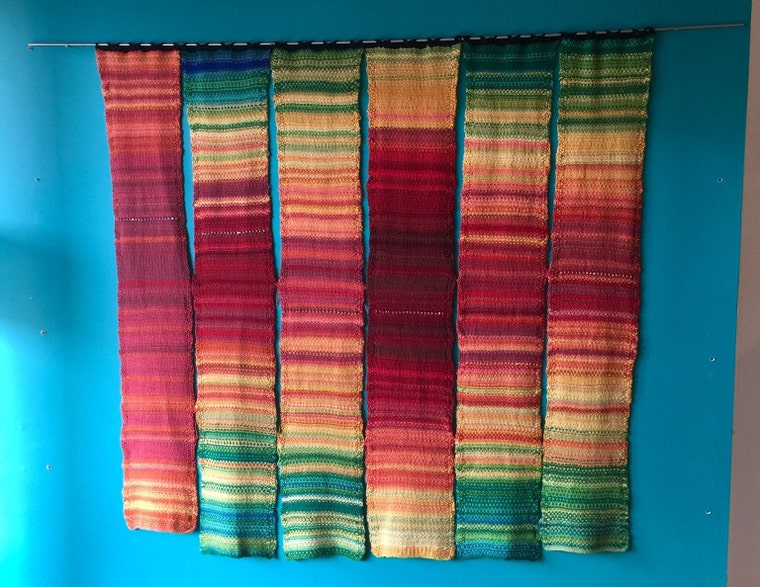
The Tempestry Project: turning climate into fiber art, one year & one place at a time
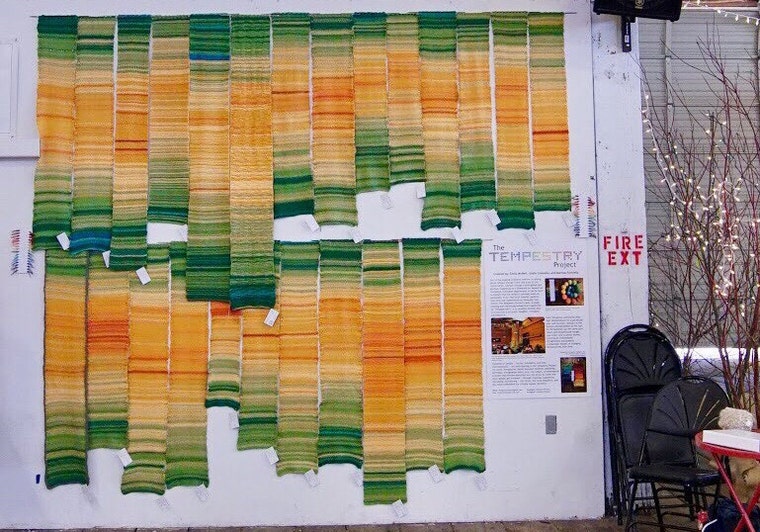
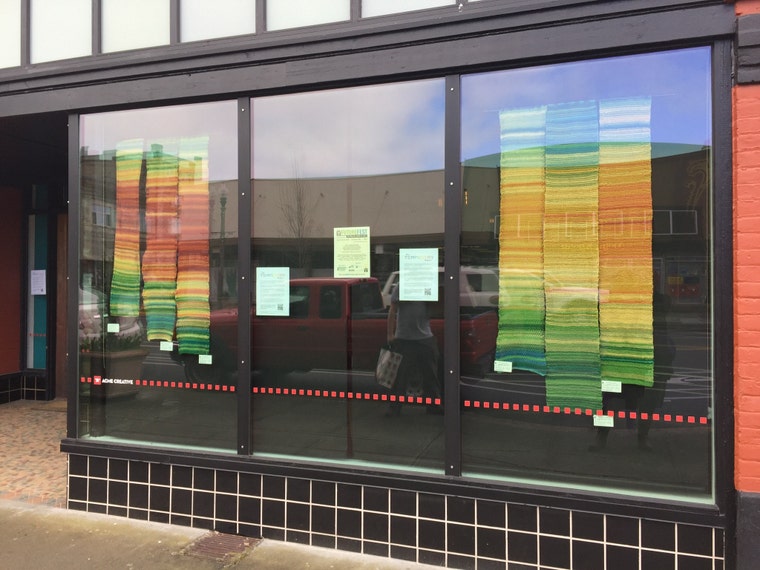
The Olga Station Tempestry Collection, created by the San Juan County Textile Guild, is currently being exhibited at the Pacific Northwest Quilt & Fiber Arts Museum in La Conner, WA. Check out some beautiful photos of this collection: http://www.sjctextileguild.org/galleries.html
Recent news coverage:
Philadelphia Collection: https://www.philly.com/news/tempestry-climate-change-temperature-tapestries-philadelphia-schuylkill-center-20190507.html
National Parks Collection: https://www.nationalparkstraveler.org/2019/04/crafters-work-create-national-park-tempestry-project
Natural Resources Defense Council: https://www.nrdc.org/onearth/trump-trying-pull-wool-over-our-eyes-about-climate-change-these-knitters-arent-having-it
* * * * * * * *
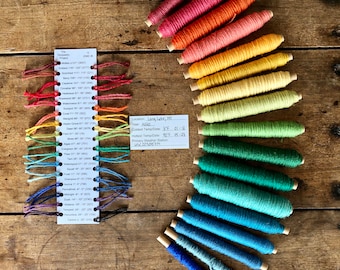
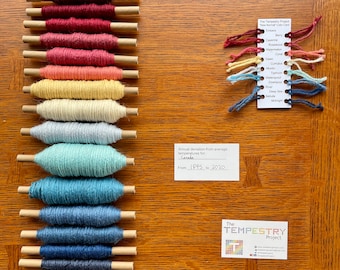
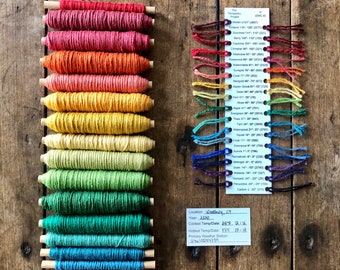
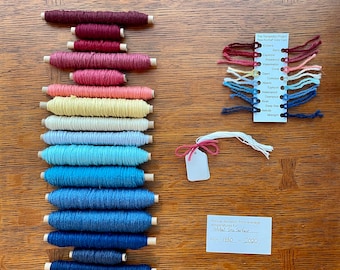
One of the ongoing problems inherent in discussions about climate change is the vast scale of the conversation. Climate change is both global and gradual, happening on a timescale far beyond our immediate individual experiences. Our goal, through knitting and crocheting temperature tapestries (or “Tempestries”), is to visualize climate data in a way that is accurate, accessible, tangible, and beautiful.
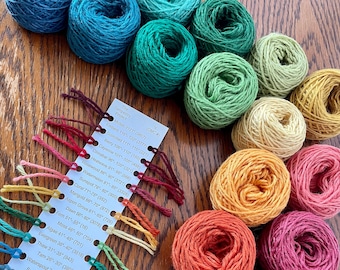
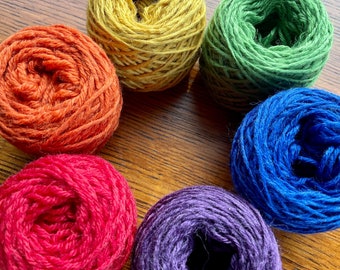
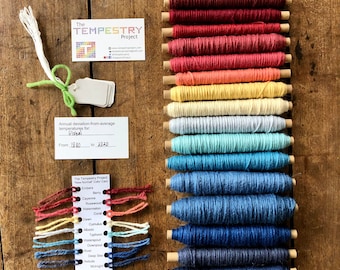
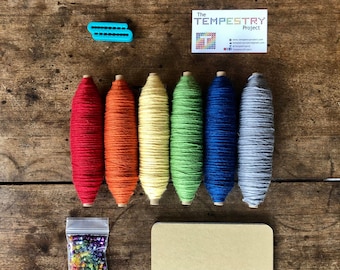
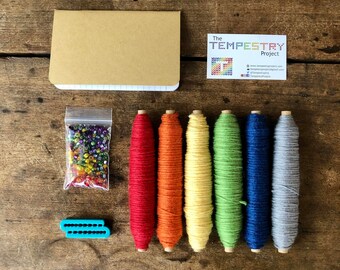
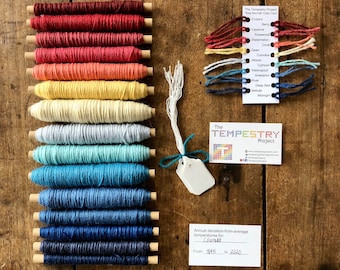
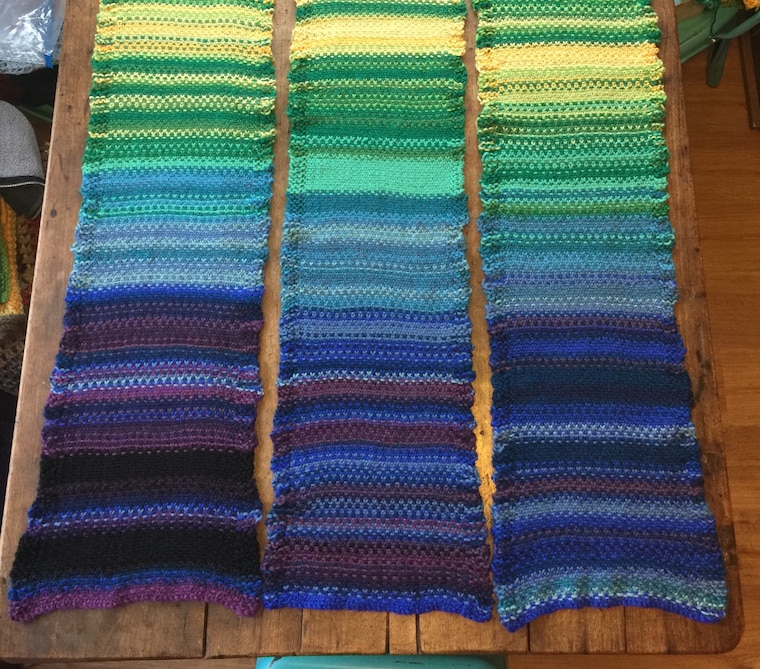
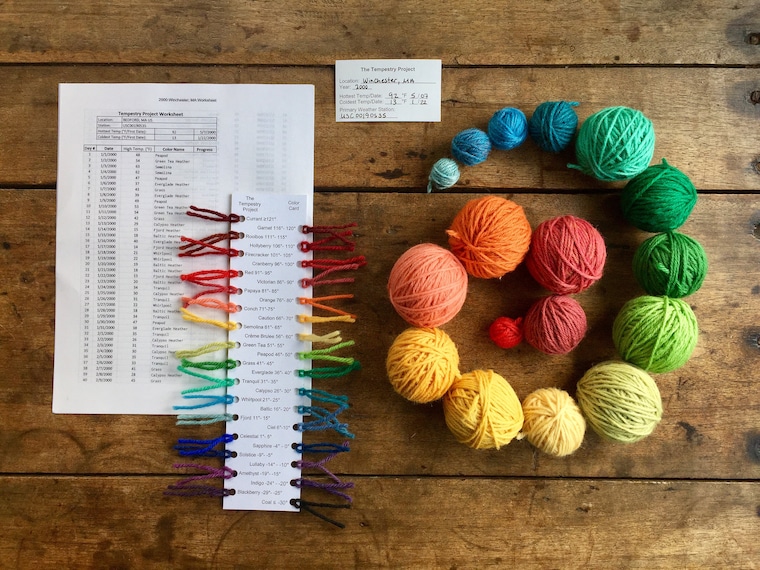
Each individual “Tempestry” embodies one year of daily high temperatures for a particular location. We’ve assigned specific colors from KnitPicks’ Wool of the Andes Worsted to represent specific temperature ranges in 5-degree increments from less than -30°F to more than 121°F. Using the same universal yarns and colors creates a visual comparison between years and places, and KnitPicks is affordable and accessible. The full list of colors and corresponding temperature ranges is included in the project guidelines in each Tempestry Kit. This information is also available for free on Ravelry and in our Facebook Group Files.
As more and more people create Tempestries, both individually and in geographic collections, a mosaic of our climate history is beginning to emerge. The more people get involved — through knitting, crocheting, discussing, sharing — the richer, the more beautiful, and the more undeniable this mosaic becomes.
Temperature data comes from the National Oceanic & Atmospheric Administration (NOAA), and is available to the public at www.ncdc.noaa.gov/cdo-web/search. Please note, the data is not always complete and sometimes has to be supplemented with data from www.wunderground.com, or from nearby weather stations.
