





Bodenständig. In der Stille verwurzelt. Handgefertigt.
Down to Earth. Rooted in Stillness. Crafted by Hand.
In den Mustern liegt eine stille Sprache.
Bevor das Denken die Welt in Namen und Formen unterteilt, existiert Rhythmus: das Wenden der Blätter zum Licht, die Bewegung des Wassers um Steine, die Spirale sich entfaltender Blütenblätter und Galaxien. Formen kehren über alle Maßstäbe und Entfernungen hinweg wieder, als sei das Gewebe der Existenz selbst durch Symmetrie, Proportion und Wiederkehr gewoben.
In der kontemplativen Tradition islamischer Kunst wird Geometrie nicht bloß als Ornament, sondern als Feld der Erinnerung verstanden. Wiederkehrende Formen ohne Zentrum und Ende zielen nicht darauf ab, die Unendlichkeit zu umfassen, sondern weisen über sich hinaus – auf das, was sich der Form entzieht. Jede Linie hängt von der anderen ab. Jede Form entsteht aus Beziehung. Nichts steht für sich allein; alles ist voneinander abhängig.
So wird Muster zu einer Art Enthüllung durch Verbergen. Das Sichtbare ist präzise, geordnet und endlich – und doch verweist es auf das Unermessliche. Das Auge folgt der Wiederholung, bis es nicht mehr in den Teilen aufgeht, sondern von der ihnen zugrunde liegenden Einheit angezogen wird. Vielfalt löst sich nicht in Abwesenheit, sondern in Kohärenz auf.
Die Formen der Natur spiegeln dasselbe Prinzip wider. Spiralen in Muscheln, Verzweigungen in Bäumen, die stille Mathematik von Wachstum und Verfall – all dies erscheint als Variation einer einzigen sich entfaltenden Ordnung. In der islamischen Betrachtung werden solche Formen oft als Zeichen gedeutet: nicht als Selbstzweck, sondern als Hinweise auf einen tieferen Ursprung, wo Trennung nur scheinbar und die Wiederkehr stetig ist.
Sich mit Mustern auseinanderzusetzen bedeutet also, Aufmerksamkeit zu üben. Sich durch Wiederholungen zu bewegen, ohne von ihnen eingeschränkt zu werden. Die Form vollständig zu erfassen und sich dennoch daran zu erinnern, dass die Form nicht endgültig ist.
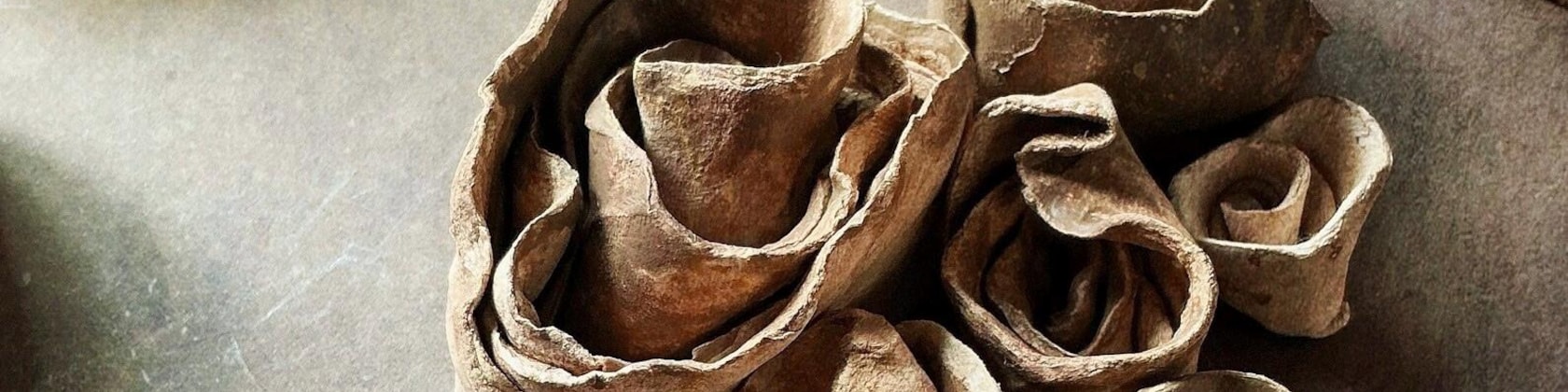
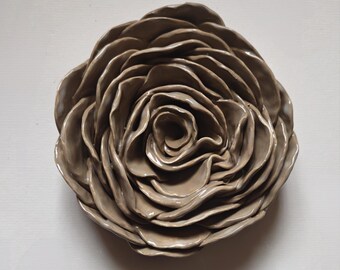
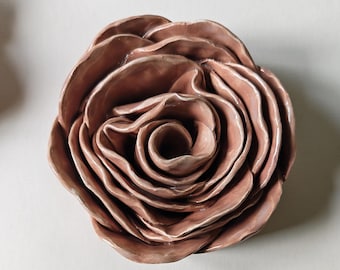
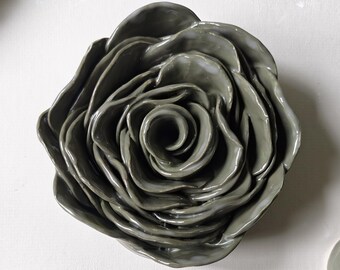
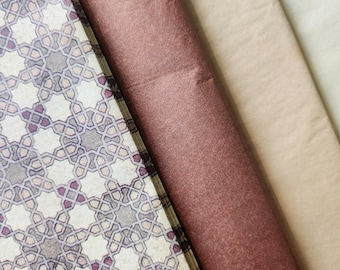
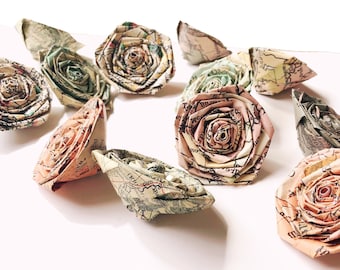
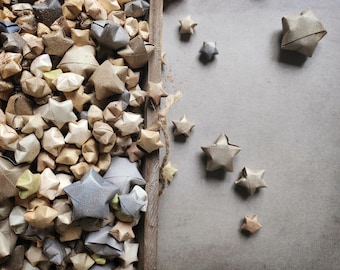
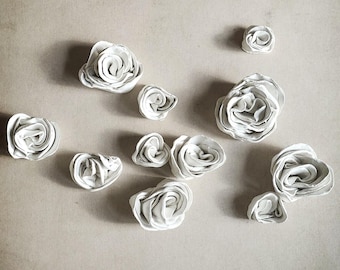
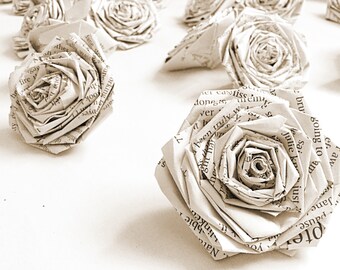
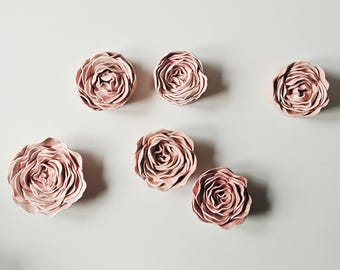
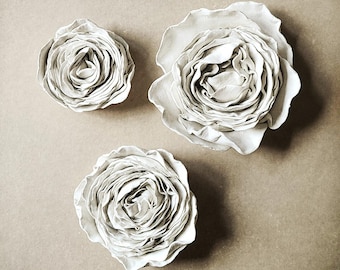
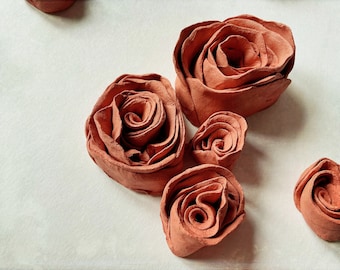
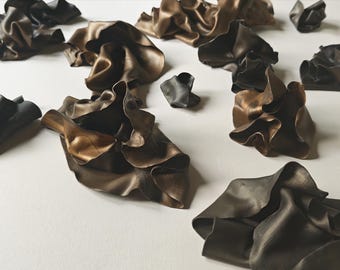
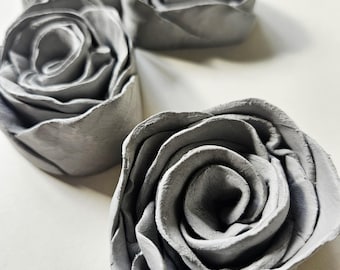
Diese handgefertigten Werke entspringen demselben Feld der Kontemplation – langsam geformt, von Wiederholung geprägt und in den stillen Unregelmäßigkeiten des Handmachens gehalten –, sodass das Gesehene still über sich selbst hinausweisen kann und der Kosmos als ein gewebter Wandteppich empfangen werden kann, der selbst nicht der Weber ist.
There is a quiet language within pattern.
Before thought divides the world into names and forms, there is rhythm: the turning of leaves toward light, the movement of water around stone, the spiral of unfolding petals and galaxies. Forms recur across scale and distance, as though the fabric of existence itself is woven through symmetry, proportion, and return.
Within the contemplative tradition of Islamic art, geometry is understood not as ornament alone, but as a field of remembrance. Repeating forms without centre or end do not seek to contain infinity, but to point beyond themselves — toward that which cannot be circumscribed by form. Each line depends upon another. Each shape arises through relation. Nothing stands alone; all things are held in interdependence.
In this way, pattern becomes a kind of unveiling through concealment. What is visible is precise, ordered, and finite — yet it gestures toward what is beyond measure. The eye follows repetition until it is no longer absorbed in the parts, but drawn toward the unity that underlies them. Multiplicity dissolves not into absence, but into coherence.
Forms in the natural world reflect the same principle. Spirals in shells, branching in trees, the quiet mathematics of growth and decay — all appear as variations of a single unfolding order. In Islamic reflection, such forms are often read as signs: not as ends in themselves, but as indications of a deeper source, where separation is only apparent and return is continual.
To dwell with pattern is, then, to practice attention. To move through repetition without being confined by it. To see form fully, and yet to be reminded that form is not final.
These handmade works arise from that same field of contemplation — shaped slowly, marked by repetition, and held in the quiet irregularities of hand-making — so that what is seen may quietly point beyond itself, and the cosmos may be received as a woven tapestry that is not itself the Weaver.
