Your Etsy product listing is more than just a description—it serves as a bridge between your product and your potential customer. A well-crafted listing has the power to transport a potential buyer who’s shopping from their screen to imagining holding your item in their own two hands, building trust and communicating your brand’s story. Every detail, from your photos to your product description, plays a crucial role in converting browsers into buyers.
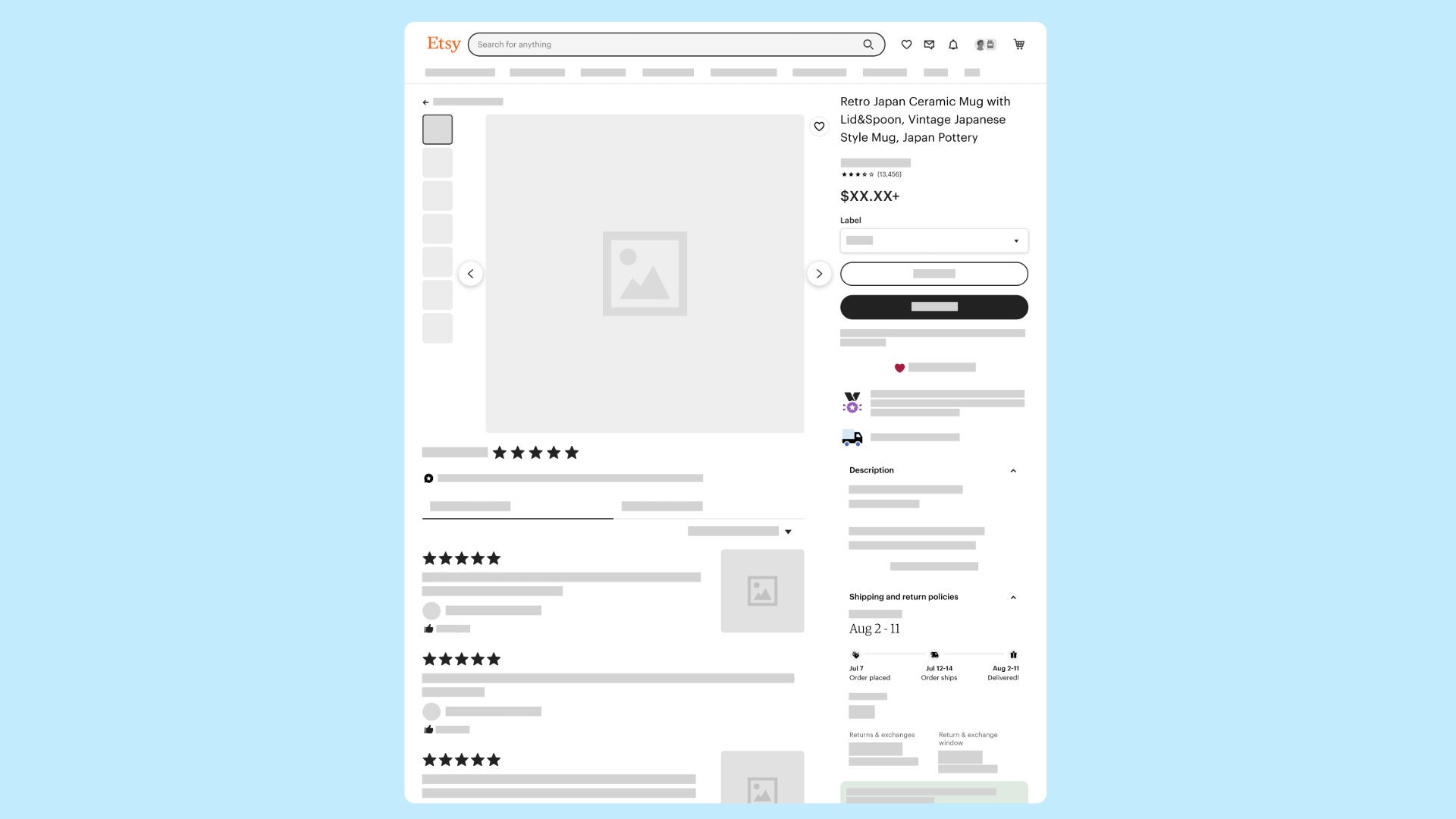
In this article, we’ll break down the anatomy of an Etsy listing page, helping you understand key elements and offering tips to optimize them for maximum visibility, engagement, and sales. While the specifics of how your listing is displayed can vary depending on how a shopper is viewing it—whether on desktop, mobile, or through Etsy’s app—the core elements that make up a strong listing remain the same. Let's dive in!
At a glance
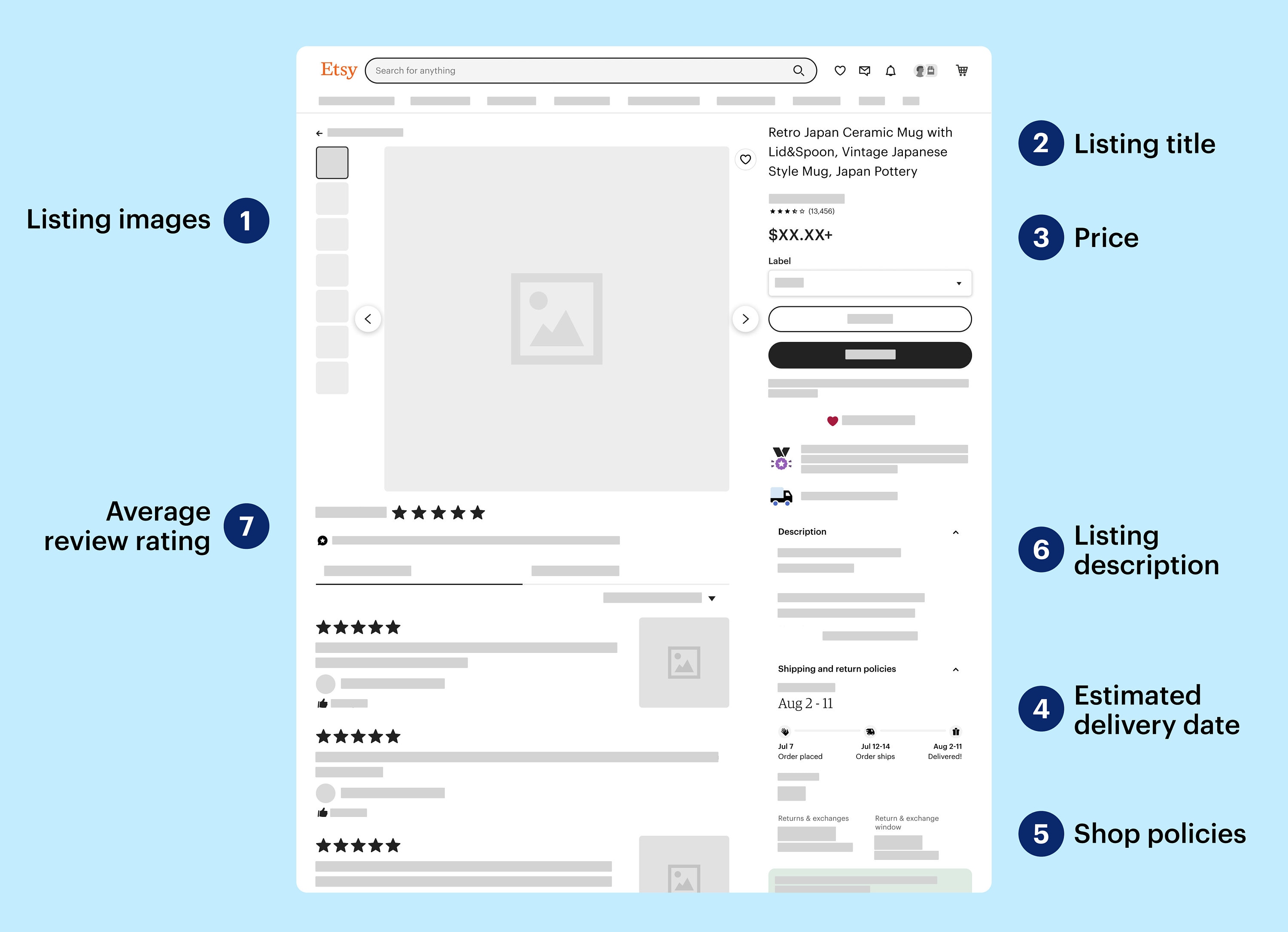
- Listing images
- Listing title
- Price
- Estimated delivery date
- Shop policies
- Listing description
- Average review rating
- Attributes
- Tags
- You and your small business story
1. Listing images
Your first listing image can help get you the click from search results, but those that follow can help get you the sale. If you’re looking to optimize your first listing for search engines, avoid text overlays, collages, or using a collection of images for your first thumbnail.
You can add up to 20 photos to a listing. Using multiple images may increase your conversion rate because each additional image you add gives shoppers more information about your product. For example, if you’re selling art, buyers may want to see a photo of it styled in a room to get a sense of the size and style, while customers shopping for a statement ring may want to see it on a model.
Key tips:
- Show multiple angles: Include shots from different perspectives, including close-ups that highlight details and textures.
- Include lifestyle images: Show your product in use or within its intended environment. For example, if you sell a handmade sweater, include a photo of someone wearing it.
- Use good lighting: Natural light is best to capture accurate colors and details. Avoid using flash, which can create harsh shadows.
- Keep the background simple: A clean, neutral background ensures the focus stays on your product.
- Factor in resolution: Your first listing photo should have a width and height of at least 635 pixels to avoid showing up lower in searches. But we recommend your listing photos have a width and height of at least 2000 pixels or more to make them pop to buyers.
Check out the 7 Essential Types of Product Photos to learn more.
2. Listing title
Your titles can also play a role in getting shoppers to click on your listing. Your title should make it easy for shoppers to quickly see what you’re selling and what makes it unique. Shoppers only see the first few words of your title when they’re looking at search results, so make sure you’re using that space to describe what your item is. Although it’s important to be descriptive and use relevant words and phrases, your titles should be short and easy to read.
Remember—Etsy search takes a holistic view of your listing, including title, tags, attributes, descriptions, first photo, reviews, and more—to help connect your items with the right buyers. That means your title doesn’t need to do all the work. You can focus on clarity and relevance in your listing titles, while moving other key details to listing tags, descriptions, and attributes. This will help you more easily show up to interested buyers and also help them feel more confident about making a purchase.
Key tips:
- Clearly name the item for sale, like “mug” or “dress”
- Include the most important traits upfront, like your item’s color, material, and size
- Streamline for clarity and scannability. Consider using less than 15 words when including the traits that make your item special.
- Only include holidays, special occasions, or recipient types if they’re essential to what the item is, like “birthday candle” or “Halloween costume”
- Move subjective words, like “perfect” or “beautiful,” to the description
- Try not to repeat words
- Don’t worry about adding info about price, shipping, or sales. Etsy helps take care of this by badging your items in Search.
We know writing titles can feel tricky, so we've created an optional AI-powered tool that suggests updated listing titles using your current title, first photo, and description. If you have listings that could benefit from these adjustments, you’ll see suggestions available from your search visibility dashboard on Etsy.com or in the Etsy Seller app. Note: This tool is currently available for eligible English listings.
Read Keywords 101 for more dos and don’ts.
3. Price
Many costs go into making a single finished product, including all of the expenses incurred during creation, sale, and shipment. Getting a grasp on those costs—along with your desired profit—will help you determine your base retail price. Then, experimentation and market research will help you refine your approach over time.
Note: Your items should be priced so that you can be both profitable and competitive, but high shipping prices can often discourage shoppers from completing a purchase. In fact, buyers have told us that expensive shipping is a top 10 barrier to purchase on Etsy. * Our data also shows that shifting some of your shipping costs into your item price while keeping the total price the same can be an effective way to improve your sales.
Check out How to Price for Profit, Conversion, and Growth to learn more about two popular approaches to pricing. Plus, get a refresher on How Shipping Price Is Factored Into Search for US Domestic Listings.
4. Estimated delivery date
Quick delivery is an important factor for shoppers. Throughout the purchase experience, we’ll share updates with your buyers about their orders progress based on information you’ve provided, including your processing times and shipping service (mail class and carrier). Try adjusting your stated processing times in your Shipping Profiles to set buyer expectations, while staying realistic and accurate about the time it will take you to prepare the item and coordinate shipment.
5. Shop policies
Clear shop policies let buyers know what they can expect when they make a purchase from your shop, like whether you’ll accept returns or exchanges.** Having shop policies has a positive effect on your search placement and using Etsy’s shop policies template can give you an additional boost. Learn more about customer and market experience score and its influence on search results in How Great Customer Service Can Improve Your Search Ranking.
6. Listing description
Your listing descriptions can help convert views to sales. We suggest keeping your descriptions short and informative, but still engaging. For example, put essential information at the top, such as sizes, dimensions, colors, or ordering directions, and end on a note that best tells your product’s story, with your brand in mind.
Plus, Etsy search considers keywords and phrases within your listing descriptions when ranking your listings, the second phase of search ranking, within Etsy’s search algorithm.
Key tips:
- Aim to incorporate relevant keywords in the first few sentences.
- Avoid copying your title verbatim or simply listing your top keywords. Instead, you want to craft a sentence or two that casually incorporates a few of your top keywords in a way that sounds human and written in your brand’s voice.
- Be informative and engaging. Write clearly, focusing on what makes your product unique. Include details like dimensions, materials, care instructions, and any customization options.
- Tell a story. People love to connect with the creators behind the items. Share the inspiration behind the product or the process you use to make it.
- Use bullet points or short paragraphs for easy reading. A long block of text can be intimidating and hard to digest.
7. Average review rating
Good reviews let customers know what to expect when they shop with you and help give them confidence to purchase from your shop. Star ratings of 4 or 5 help attract new buyers and keep them coming back to your shop. For more tips, read How to Get 5-Star Reviews.
Note: New listings will still be shown in search even if they don’t have any reviews or ratings yet, as long as they don’t have any other listing or shop quality issues. Learn more about search visibility on Etsy.
Bonus: Build buyer trust with a Star Seller badge
Consistently going above and beyond for your customers could also help you become a Star Seller, which serves as a further trust signal to buyers and can drive increased conversion for your shop. You can keep track of your daily progress on your customer service stats page.
8. Attributes
The attributes you add to your listings also act like tags and can help your item match with a shopper’s search. Attributes describe specific characteristics of your item including material, primary color, secondary color, holiday, occasion, height, and width.
When you add more specific categories to your listing, you may also be able add more specific attributes that are unique to that category. For example, when listing a necklace in the jewelry category, you can add attributes for the chain style or number of strands. When listing beads in the craft supply category, you can add attributes for the bead size and shape. Choose the option that best fits your item, even if it’s not exactly how you would describe it.
All these super-specific keywords can help shoppers who know exactly what they’re looking for find your item in Etsy search. If a phrase appears in your attributes, you don’t need to add it as a separate tag. Try adding attributes.
9. Tags
Each tag you add to a listing is an opportunity for it to appear in a shopper’s search, and unused or irrelevant tags are missed opportunities. You should add 13 tags to all of your listings. Your tags should be multi-word phrases and use natural-sounding language. One rule of thumb to follow: If you can’t imagine someone typing a phrase into Google, it shouldn’t be in your tags. Add variety to your tags, too. There’s a lot that makes your item unique. Add tags that describe what your product is, how it’s made and who it’s for.
10. You and your small business story
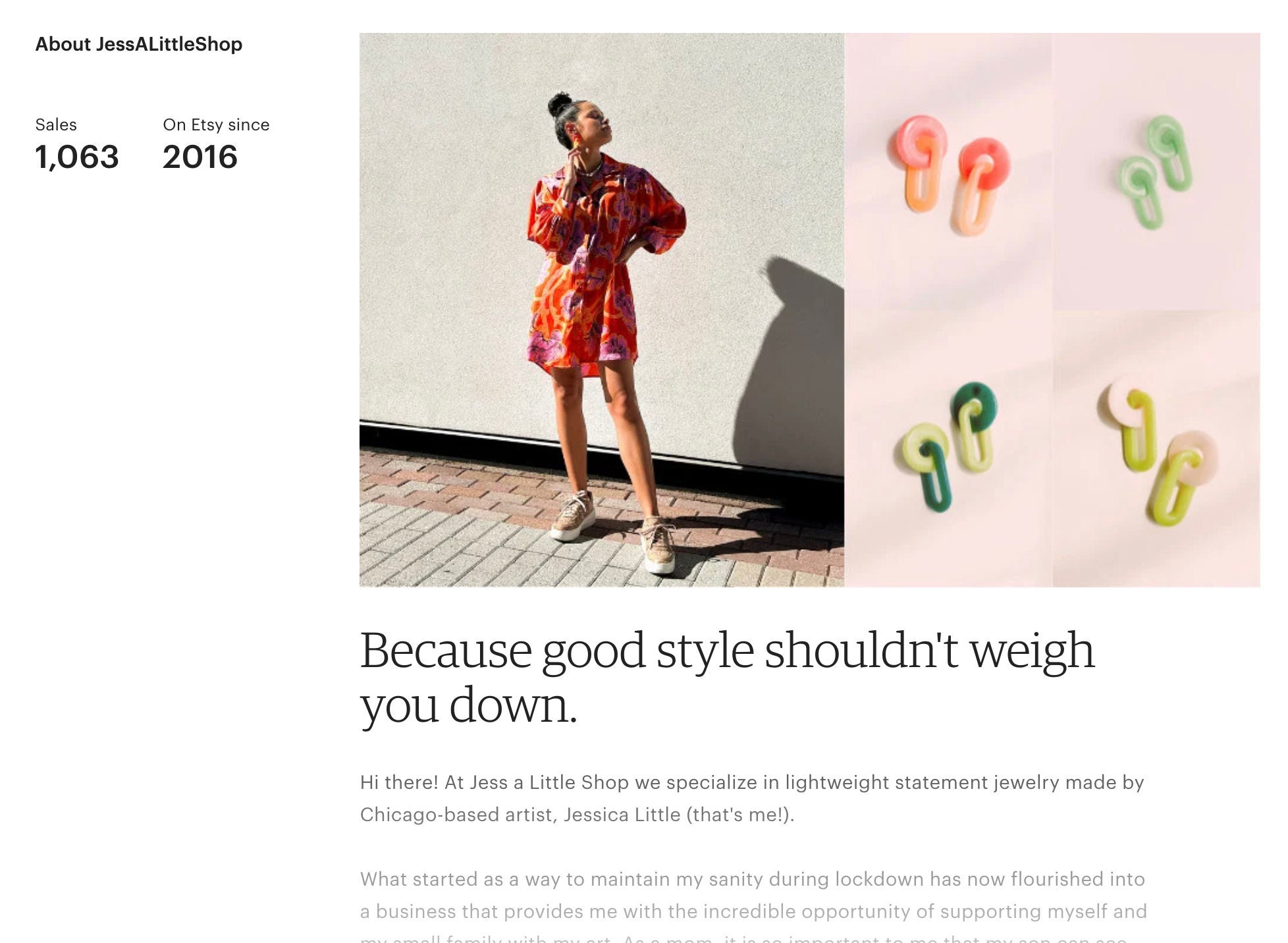
Shoppers come to Etsy to buy from real people. Getting to see the person behind the products can give them greater confidence to make a purchase, and learning your personal story can inspire loyalty to your brand. Adding photos and details about your brand story to your shop’s about section is a great way to take prospective buyers behind the scenes of your passion and process in order to deepen their understanding of what makes your shop so special. It can also spark unexpected opportunities, including press coverage, collaborations, and new opportunities.
Another place to share your story and influence search engine optimization is your shop title, where you can describe your shop, generally using something like a tagline or slogan, or a concise description of what you sell.
Check out How to Craft a Killer About Section for more inspiration.
*Based on Etsy market research of a nationally representative survey of 6,000 US adults in Q1 '24; these findings are from a subsample of 2,052 respondents.
**Note that depending on where you are based, your local laws may require you to allow returns. Learn more in the Etsy Help Center.
 Words by Katy Svehaug
Katy Svehaug is a Senior Content Strategist at Etsy.